
Dr. Abdul Moyeen Khan: A Technocratic Visionary and Bulwark of Democratic Integrity
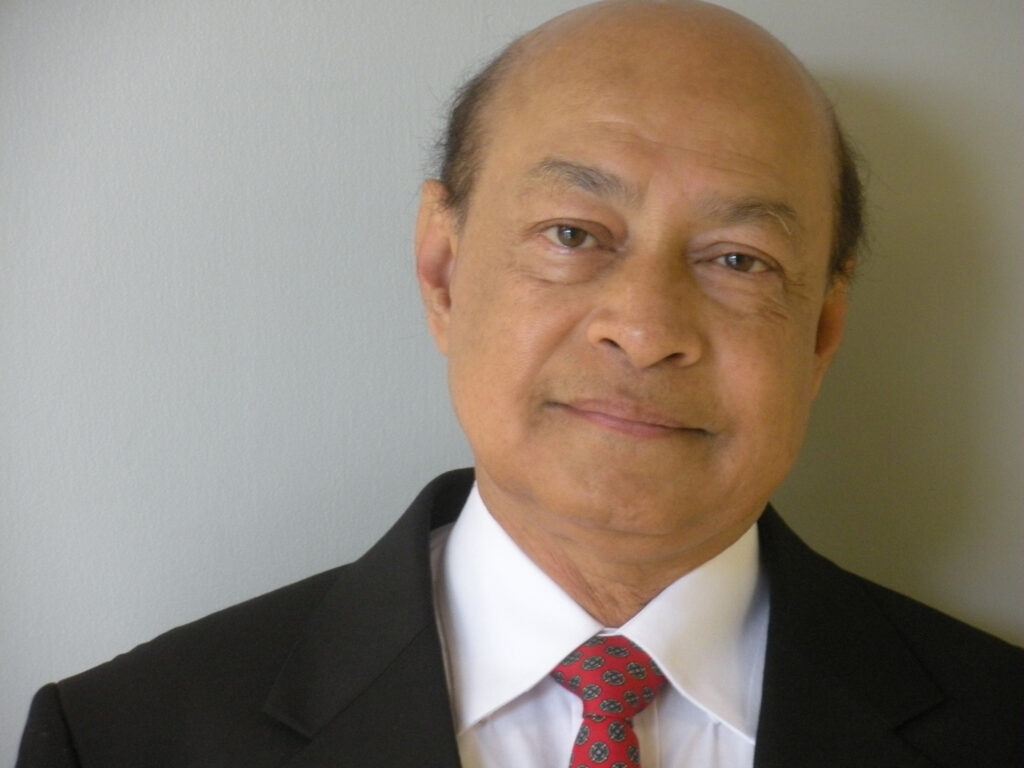
Mostofa Sarwar : In the evolving narrative of Bangladesh’s political development, few public figures embody the rare convergence of academic excellence, technocratic sophistication, and unwavering democratic commitment as profoundly as Dr. Abdul Moyeen Khan. His journey—from the disciplined corridors of scientific research to the demanding frontlines of national governance—offers a compelling model of principled leadership at a time when Bangladesh’s political landscape increasingly demands both intellectual rigor and moral clarity. Dr. Khan’s career stands as a testament to how knowledge, integrity, and public duty can be harmonized to serve a nation striving for democratic resilience and institutional maturity.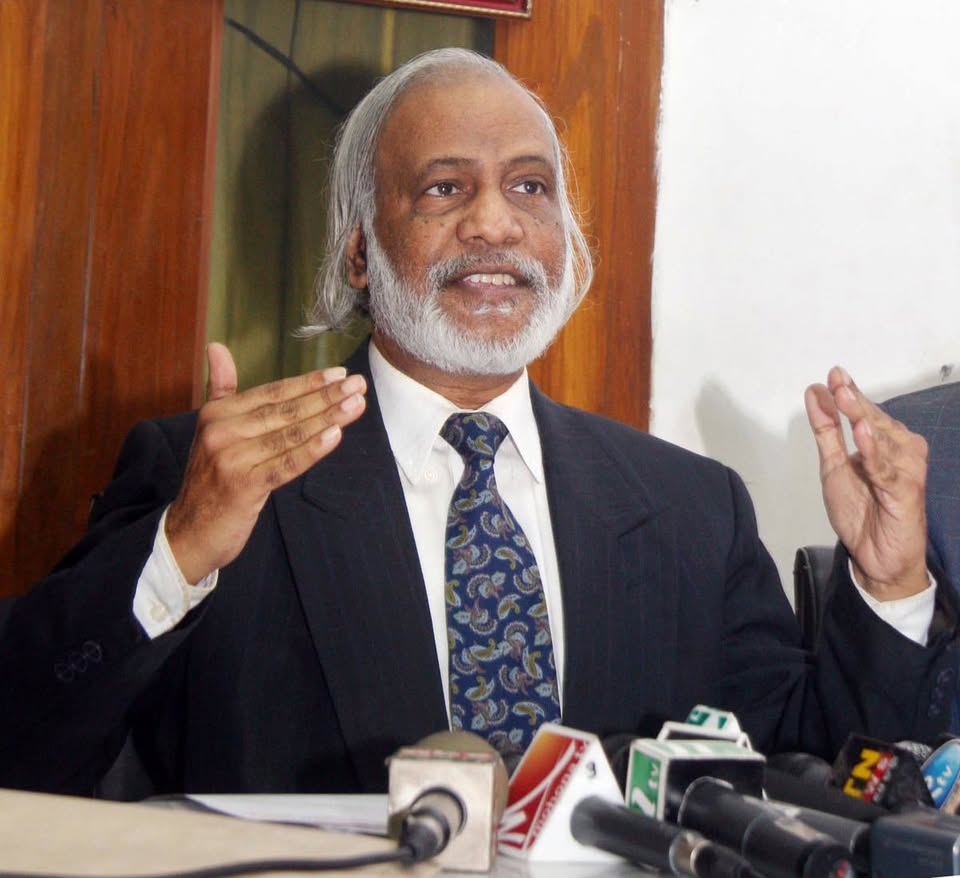
Long before he entered the national legislature, Dr. Khan had already distinguished himself as an intellectual force. Raised in a family deeply rooted in public administration—his father, Abdul Momen Khan, served as Cabinet Secretary and Food Minister, and helped shape the early administrative architecture of independent Bangladesh—he inherited a legacy of disciplined governance and civic responsibility. Yet Dr. Khan did not rely on pedigree alone. After graduating from Notre Dame College, he pursued advanced scientific studies at the University of Sussex and earned a doctorate in physics. This achievement placed him among a small cohort of Bangladeshi scholars who reached the highest levels of scientific training during the nation’s formative decades.
His return to Bangladesh marked the beginning of a distinguished academic career. As an Assistant Professor of physics at the University of Dhaka, Dr. Khan devoted years to cultivating critical thinking, scientific literacy, and intellectual independence among young students. His work in quantum dynamics demanded precision, analytical depth, and disciplined reasoning—qualities that would later become hallmarks of his political leadership. In 1991, when he transitioned from academia to public service, he carried with him a scientific mindset that would profoundly shape his approach to governance.
It was at this pivotal juncture that Prime Minister Tarique Rahman demonstrated remarkable sagacity and keen political acumen by recognizing Dr. Khan’s unique blend of intellectual rigor and administrative promise. In selecting him for national leadership, the Prime Minister displayed an uncommon ability to identify talent not merely by political pedigree but by merit, foresight, and national need. This decision reflected a deep understanding that Bangladesh’s future would increasingly depend on leaders who could bridge scientific reasoning with public policy. The Prime Minister’s confidence in Dr. Khan’s abilities was not only a testament to his own discerning leadership but also a defining moment that allowed a brilliant technocrat to bring his expertise to the service of the nation.
Dr. Khan’s administrative record reflects a consistent commitment to modernizing national systems and strengthening institutional capacity. Over a decade of parliamentary service representing the Narsingdi‑2 constituency, he earned his electorate’s trust through decisive electoral victories and sustained engagement with local development needs. His constituents repeatedly affirmed his leadership, recognizing in him a rare combination of intellectual depth and practical administrative competence.
His entry into high-level governance during the BNP-led government marked a turning point in Bangladesh’s technocratic evolution. As Minister of State for Planning (1993–1996), Dr. Khan introduced a disciplined, data-driven approach to national resource allocation. He emphasized long-term economic strategy over short-term political expediency, ensuring that public investments were aligned with national development priorities. His tenure strengthened the Planning Commission’s analytical capacity and reinforced the importance of evidence-based policymaking in a country where political rhetoric often overshadowed technical considerations.
Dr. Khan’s leadership expanded further when he assumed the role of Information Minister (2001–2002). At a time when public communication was rapidly transforming, he championed transparency, accountability, and open dialogue between the government and citizens. His efforts contributed to a more structured and responsible information ecosystem, reinforcing the principle that democratic governance requires clear, honest communication.
His most transformative contributions emerged during his tenure as Minister for Science, Information & Communication Technology (2002–2006). At a moment when Bangladesh was only beginning to imagine its digital future, Dr. Khan laid foundational policies that would later support the country’s technological expansion. He advocated for modern telecommunications infrastructure, encouraged digital literacy, and promoted early frameworks for ICT governance. These initiatives helped position Bangladesh for the digital progress that would accelerate in subsequent decades. While the full impact of these reforms unfolded gradually, their early implementation demonstrated Dr. Khan’s foresight and his ability to anticipate the technological needs of a rapidly changing world.
Beyond his ministerial responsibilities, Dr. Khan’s most enduring legacy lies in his principled leadership within the Bangladesh Nationalist Party (BNP). Elevated to the National Standing Committee—the party’s highest policy-making body—he became one of its most articulate voices on democratic governance, civil liberties, and institutional reform. His speeches, interviews, and policy statements consistently emphasized the need for electoral integrity, rule of law, and constitutional accountability. In an era marked by political polarization and institutional strain, Dr. Khan’s steady, reasoned presence offered a counterbalance to the escalating rhetoric of confrontation.
Even amid intense political turbulence, personal hardship, and institutional pressure, Dr. Khan remained composed and resolute. His ability to engage international diplomats, human rights organizations, and global policy forums with clarity and intellectual sophistication earned him respect beyond Bangladesh’s borders. Observers often noted his capacity to present Bangladesh’s democratic challenges in a manner that was both analytically rigorous and morally grounded. This international engagement strengthened Bangladesh’s democratic discourse and underscored the importance of principled leadership in global diplomacy.
What distinguishes Dr. Abdul Moyeen Khan most profoundly is his unwavering commitment to intellectual integrity in public life. He represents a model of leadership rooted not in populism or political theatrics but in disciplined reasoning, scientific clarity, and ethical responsibility. His career demonstrates that technocratic expertise and democratic values need not exist in tension; rather, they can reinforce each other to produce governance that is both effective and just.
As Bangladesh continues to navigate the complexities of political reform, technological transformation, and institutional consolidation, Dr. Khan’s vision remains deeply relevant. His emphasis on modernizing national systems, strengthening democratic institutions, and promoting technological progress offers a roadmap for a future defined not by political expediency but by long-term national interest. In a political environment often clouded by uncertainty, his voice reminds us that leadership grounded in intellect and integrity can still shape a nation’s destiny.
Dr. Abdul Moyeen Khan’s legacy is not merely a record of past achievements; it is an ongoing contribution to Bangladesh’s democratic imagination. By pairing scientific precision with steadfast public commitment, he continues to embody the enduring power of principled leadership—one that seeks to build a Bangladesh defined by institutional strength, technological advancement, and democratic accountability.
Dr Mostofa Sarwar is Professor Emeritus at the University of New Orleans, former Visiting Professor and Adjunct Faculty member at the University of Pennsylvania, and former Dean and Vice-Chancellor of Delgado Community College. He can be reached at [email protected].





সম্পর্কিত খবর



- নিউইয়র্কে বাংলাদেশ সোসাইটির নির্বাচনে প্রথমবারের মতো বিতর্ক, গুরুত্ব পেল স্বচ্ছতা ও জবাবদিহি
- New York Attorney General James Warns New Yorkers About AI-Generated Election Misinformation Ahead of November Elections
- Bangladesh calls for global treaty to protect victims of crimes against humanity
- নিউইয়র্কে জাতিসংঘে মুহাম্মদ নওশাদ জমির এমপি: মানবতাবিরোধী অপরাধ প্রতিরোধে শক্তিশালী আন্তর্জাতিক সনদ প্রণয়নের আহ্বান
- সোশ্যাল মিডিয়ার তথ্য গোপন করলে যুক্তরাষ্ট্রের ভিসা প্রত্যাখ্যান, আবেদনপত্রে চাওয়া তথ্য সঠিক ও সম্পূর্ণভাবে দেওয়ার নির্দেশনা মার্কিন দূতাবাসের
- ভার্জিনিয়ায় অসুস্থ মুক্তিযোদ্ধা সাংবাদিক হারুন চৌধুরীকে দেখতে গেলেন বাংলাদেশি কমিউনিটি নেতৃবৃন্দ
- New York Attorney General James Issues Voter Guidance to Inform New Yorkers of Their Rights Ahead of November Election
- নিউইয়র্কে সাউথ এশিয়ান-আমেরিকান রিয়েলটর অ্যাসোসিয়েশনের বর্ণিল অভিষেক