
Here’s How Trump Might Reshape City Schools
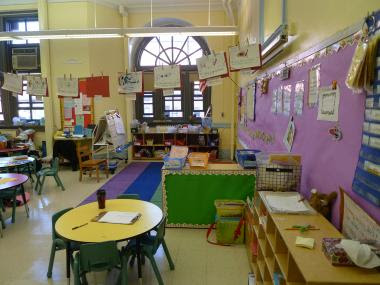
By Amy Zimmer, MANHATTAN — President-elect Donald Trump’s top picks for a new Secretary of Education remain a mystery after Success Academy CEO Eva Moskowitz officially withdrew her name from consideration this week. But whomever he chooses, his vision could have far-reaching effects on city schools, including those Moskowitz helms. For example, while Moskowitz supports school choice — which Trump is pushing — she is also a big proponent of the Common Core standards, unlike Trump who made no secret of his disdain for the program. “Get rid of Common Core,” he tweeted in February. Here’s a look at how Trump’s ideas for education could affect city schools: ►Trump hates the Common Core — but he may not be the anti-testing parents’ champion either. NYC’s growing opt-out movement has seen more and more students sit out the state English and math tests aligned with the Common Core standards in protest of the “excessive testing” culture and the commensurate stress. While Trump has also made his dislike of the Common Core standards clear, he’s not necessarily aligned with the principles of the opt-out movement, either, experts say. The opt-out philosophy grows out of progressive education, David Bloomfield, education professor at Brooklyn College and the CUNY Graduate Center, said. Many of these families are more focused on educating the “whole child” rather than having kids focus on passing tests, and they’re concerned about teachers feeling pressured to teach to the test rather than pursuing more inquiry-based and creative approaches to learning. Trump’s stance, on the other hand, is rooted in the conservative movement’s opposition to centralized mandates, Bloomfield said. In fact, Trump tweeted last year that he considered eliminating the federal Department of Education entirely and leaving decisions to the states. “I may cut Department of Education,” he reportedly told “Fox in 2015. “Keep education local,” he tweeted in February. ►Trump could siphon federal funds away from public schools and put them into educational vouchers. Trump has been a vocal supporter of school choice — in which parents are either able to choose from alternatives to traditional schools, such as charters, or are given equivalent funds to spend at the school of their choice in the form of vouchers. “I will establish the national goal of providing school choice to every American child living in poverty,” Trump said in September, adding that he wants to give out $12,000 per student per year from the time they’re in kindergarten through their senior year in high school. That could mean that Trump would divert Federal Title 1 funds that go to public schools serving low-income students to be used instead to help pay for his voucher program, Bloomfield said. If that were to happen, Bloomfield said, “It would be a radical restructuring of American education and threaten the foundations of local school districts.” Trump wants to see all states help foot the bill for a nationwide voucher program. States would contribute a total of $110 billion of their own education budgets, while the federal government would donate $20 billion. Experts said it would take a huge lift to get buy-in from New York, as well as other states. “We can’t even get states and local school districts to follow their own laws on school funding, let alone make massive reallocations,” Teachers College professor Aaron Pallas wrote in the Hechinger Report. For example, there’s already been a decade-long battle over billions of dollars that New York state owes city schools to provide court-mandated equal funding for the most needy students. In addition, the voucher system could wreak havoc on school enrollment, which is already strained under the existing system. Parents scramble for a spot in desirable schools while “undesirable” schools remain under-enrolled, he said. “Most schools that are regarded as successful are oversubscribed, and the paths to expansion include adding more students to them or opening more schools like them, which may be undesirable or take years to occur, respectively,” Pallas wrote. Vouchers tend to be favored more by special interests and religious schools, Bloomfield said — a group that’s currently less represented in the city’s educational landscape than public and charter schools. In New York City, there were nearly 240,000 students in private or parochial schools in the 2014-2015 school year — a fraction of the 1.1 million children in the city’s public school system — according to the Independent Budget Office. By comparison, there were 85,000 students in charter schools in 2014. The most recent breakdown of religious school enrollment available showed that Yeshivas enrolled close to 95,000 students in K-12 in 2012 while Catholic schools enrolled more than 87,000, according to an IBO report. There were 41,000 students in private schools that year. ► Trump might encourage for-profit online schools to expand to K-12 Trump has talked about wanting to encourage more competition in the school system — and called public schools’ hold on the nation’s educational system a “monopoly.” But his own leadership of the for-profit Trump University — which has spawned three class-action lawsuits across the country, including one in New York — could spur the proliferation of online schools at the pre-K to 12 level, Bloomfield said. The for-profit online college sector, much like Trump University, has been steadily growing as watchdogs warn that it is rife for abuse. State Attorney General Eric Schneiderman hit Trump University with a class-action fraud lawsuit after students complained the school promised to pair them with “handpicked experts” who would share the secrets of Trump’s real estate prowess, but never did. “This is straight up fraud,” Schneiderman said at the time. He has not revealed whether he intends to pursue the lawsuit following the outcome of the election. In an extreme case, an expanded voucher program could incentivize K-12 education to go the way of online universities, with families taking their money to pay for virtual classes, Bloomfield posited. “A voucher program could shape a fundamental re-organization of education,” he said. dnainfo.com/new-york






- নিউইয়র্কে বাংলাদেশ ল’ সোসাইটি ইউএসএ ইনকের শরৎ উৎসব ও ফ্যামিলি নাইট
- নিউইয়র্কে বাংলাদেশ কনস্যুলেট জেনারেলে ‘কল সেন্টার’ চালু
- নিউইয়র্ক বাংলাদেশি আমেরিকান লায়ন্স ক্লাবের নয়া কমিটির বর্ণাঢ্য অভিষেক এবং ১৩তম চার্টার বার্ষিকী উদযাপন
- New York Attorney General James Warns New Yorkers About Student Loan Scams
- Justice, equality and human rights essential to building a lasting culture of peace: Irene Khan
- ন্যায়বিচার, সমতা ও মানবাধিকারই টেকসই শান্তির সংস্কৃতি গড়ার ভিত্তি: জাতিসংঘে বাংলাদেশের স্থায়ী প্রতিনিধি আইরিন খান
- যুক্তরাষ্ট্র বাংলাদেশের সঙ্গে কূটনৈতিক ও অর্থনৈতিক সম্পর্ক জোরদার করতে চায় : স্টেট ডিপার্টমেন্টের দক্ষিণ ও মধ্য এশিয়া বিষয়ক ব্যুরোর ভারপ্রাপ্ত পরিচালক সারাহ
- নিউইয়র্কে মুসলিম কমিউনিটি ও আহলে সুন্নাতুল জামাতের ঈদে মিলাদুন্নবী (সা.) মাহফিল