
Investing in poor children saves more lives per dollar spent, UNICEF study finds
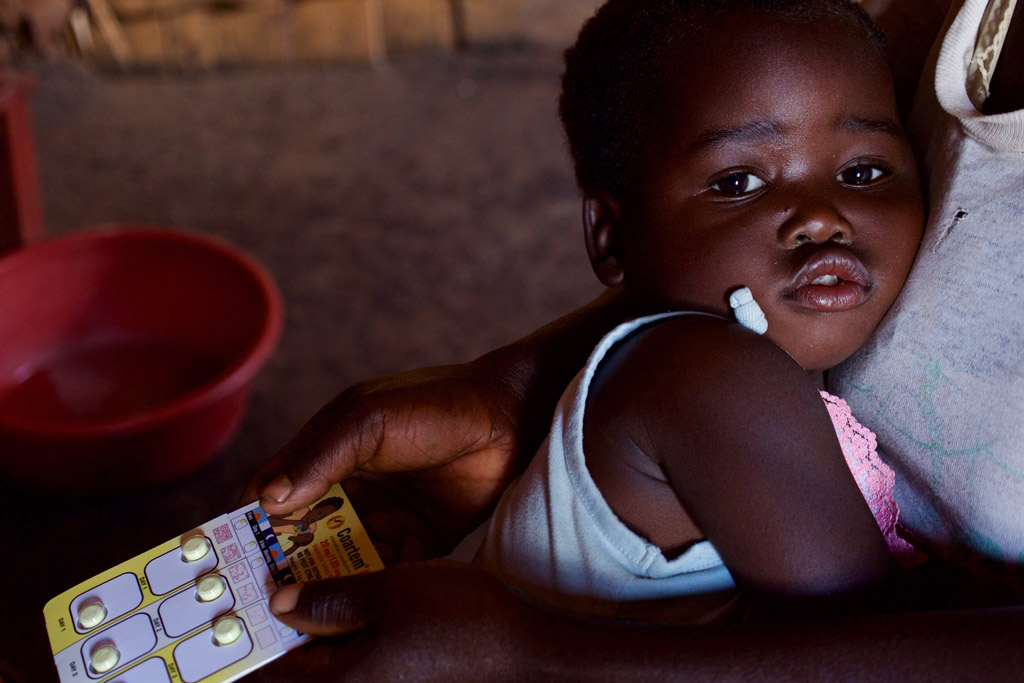
Two-year-old Shakaira Chitano is held by her mother, as she is prescribed a course of medication to treat malaria from Health Surveillance Assistant (HSA) Noah Chipeta at the Chanthuntha community clinic in rural Kasungu District, Malawi, Tuesday 30 May 2017. Chipeta and other HSAs like him are able to diagnose and treat illnesses such as malaria, diarrhoea and pneumonia in children under five years of age. Malawis Health Surveillance Assistants (HSAs) play a key role in reducing child deaths by providing basic medical care in local community clinics, ensuring that children receive medical attention quickly, and within walking distance of their homes. In order to strengthen the capacity of health workers in delivering quality health care services, a total of 1,400 HSAs and 900 community volunteers have been trained as of April 2017 in a number of areas including cholera surveillance, Integrated Disease Surveillance and Response (IDSR), and Integrated Management of Childhood Illnesses (IMCI). The majority of HSAs hold a secondary school leavers certificate. They undergo an 11-week course in integrated management of childhood illnesses and are able to diagnose and treat the most common childhood illnesses. With the success of the programme over the years, HSAs work has expanded to include diagnosing and treating children with severe malnutrition. Malawis HSA programme has contributed to a significant drop in the countrys child mortality rate - since the arrival of HSAs in communities across Kasungu, the child mortality rate in the district has more than halved.
UsaNewsOnline.Com Desk, 28 June 2017 – Investing in the health and survival of the most deprived children and communities provides more value for money than investing in less deprived groups, saving almost twice as many lives for every $1 million spent, according to a new study by the United Nations Children’s Fund (UNICEF).
“The evidence is compelling: Investing in the poorest children is not only right in principle, it is also right in practice – saving more lives for every dollar spent,” said UNICEF Executive Director Anthony Lake in a press release on the study, titled Narrowing the Gaps.
The study backs up an unconventional prediction UNICEF made in 2010: the higher cost of reaching the poorest children would be outweighed by greater results.
“This is critical news for governments working to end all preventable child deaths at a time when every dollar counts,” Mr. Lake said, noting that investing equitably in children’s health also helps break intergenerational cycles of poverty and gives them a better chance of learning more in school and earning more as an adult.
The evidence is compelling: Investing in the poorest children is not only right in principle, it is also right in practice – saving more lives for every dollar spent
The study analysed new data from the 51 countries where around 80 per cent of all newborn and under-five deaths occur. It assessed access to six high-impact maternal, newborn and child health interventions: the use of insecticide-treated bed nets, early initiation of breastfeeding, antenatal care, full vaccination, the presence of a skilled birth attendant during delivery, and seeking care for children with diarrhea, fever or pneumonia.
Findings show that improvements in coverage of life-saving interventions among poor groups helped decrease child mortality in these countries nearly three times faster than among non-poor groups. Also, interventions in poor groups proved 1.8 times more cost-effective in terms of lives saved.
The study also found that since birth rates were higher among the poor than the non-poor, the reduction in the under-five mortality rate in poor communities translated into 4.2 times more lives saved for every million people.
Further, it found that of the 1.1 million lives saved across the 51 countries during the final year studied for each country, nearly 85 per cent were among the poor.
Focus on poor children made a difference in Afghanistan, Bangladesh, Malawi
The study lists Afghanistan, Bangladesh and Malawi as some of the countries with high rates of under-five mortality where focus on the most deprived has made a difference for children. Between 1990 and 2015, under-five mortality decreased by half in Afghanistan and by 74 per cent in Bangladesh and Malawi.
The findings come at a critical time, as governments continue their work towards achieving the Sustainable Development Goals (SDGs), which set a target of ending all preventable deaths among newborns and children under the age of five by 2030. Unless progress on reducing child mortality accelerates, by 2030 almost 70 million children will die before reaching their fifth birthday.
The study calls on countries to take practical steps to reduce inequities, including: disaggregating data to identify the children being left behind; investing more in proven interventions to prevent and treat the biggest killers of children; strengthening health systems to make quality care more widely available; innovating to find new ways of reaching the unreached; and monitoring equity gaps using household surveys and national information systems.
(A two-year-old girl is held by her mother as she is prescribed a course of medication to treat malaria at a community clinic in rural Kasungu district, Malawi. Photo: UNICEF/Hubbard) Press Release.







- নিউইয়র্কে বাংলাদেশ ল’ সোসাইটি ইউএসএ ইনকের শরৎ উৎসব ও ফ্যামিলি নাইট
- নিউইয়র্কে বাংলাদেশ কনস্যুলেট জেনারেলে ‘কল সেন্টার’ চালু
- নিউইয়র্ক বাংলাদেশি আমেরিকান লায়ন্স ক্লাবের নয়া কমিটির বর্ণাঢ্য অভিষেক এবং ১৩তম চার্টার বার্ষিকী উদযাপন
- New York Attorney General James Warns New Yorkers About Student Loan Scams
- Justice, equality and human rights essential to building a lasting culture of peace: Irene Khan
- ন্যায়বিচার, সমতা ও মানবাধিকারই টেকসই শান্তির সংস্কৃতি গড়ার ভিত্তি: জাতিসংঘে বাংলাদেশের স্থায়ী প্রতিনিধি আইরিন খান
- যুক্তরাষ্ট্র বাংলাদেশের সঙ্গে কূটনৈতিক ও অর্থনৈতিক সম্পর্ক জোরদার করতে চায় : স্টেট ডিপার্টমেন্টের দক্ষিণ ও মধ্য এশিয়া বিষয়ক ব্যুরোর ভারপ্রাপ্ত পরিচালক সারাহ
- নিউইয়র্কে মুসলিম কমিউনিটি ও আহলে সুন্নাতুল জামাতের ঈদে মিলাদুন্নবী (সা.) মাহফিল