
‘Despite obstacles, Bangladesh is moving toward better future”
UsaNewsOnline.Com : Amidst ongoing propaganda relating to Bangladesh particularly centering the country’s RMG industry, trail of war crimes, political developments, etc, Heritage Foundation, a prominent think of USA, organized a seminar titled ‘Moving Bangladesh towards a Better Future’. The precise objective of the seminar was to discuss the recent political developments in Bangladesh in the context of overall socio-economic-political developments in Bangladesh in the context of progresses made by the country which is set to moving on an upword trajectory in terms of socio-economic growth. Akramul Qader, Ambassador of Bangladesh to the USA presented the key-note paper which was followed by two separate panel discussions on economics and politics & security moderated respectively by Walter Lohman and Lisa Curtis of Heritage Foundation. The economics panel included eminent economists like Edward Gresser, Dr. Munir Quddus and Shamarukh Mohiuddin and the politics & security panel was constituted of political analysts like Dr. Ali Riaz and Maneeza Hossain. Dr. Alyssa Ayers of US Department of State also joined the panel to highlight various aspects of US-Bangladesh relationship and how the current economic and political atmosphere in Bangladesh is perceived by the policy makers in the USG. The seminar was attended by both US and Bangladeshi scholars, senior US officials, journalists, members of Bangladesh Diaspora.
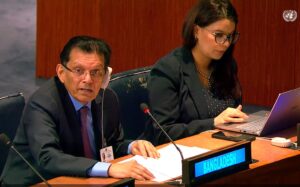
In his keynote speech, Ambassador Qader highlighted Bangladesh’s development journey since independence emphasizing on key achievements in important socio-economic sectors like trade and investment, human development, education and women empowerment, etc. The paper also focused on the present government’s commitment to uphold democratic values of the people of the country manifested by recently held city corporation elections, adherence to rule of law and war crimes trial.
In a tone setting inaugural statement, the moderator Walter Lohman highlighted Bangladesh’s continuing economic progress and criticized the US’s decision to suspend the GSP benefit of Bangladesh citing it as an incorrect move. The Panel discussion on economics focused mainly the issues related to RMG and its impact on Bangladesh’s socio-economic development, recent sanction of the US Government on Bangladesh’s trade privileges, i.e. GSP and the multiple initiatives by the buyers and retailers in EU and USA to ensure worker and fire safety in Bangladesh. Dr. Munir Quddus presented on the RMG industry, from the historical perspective to its growth to the current state and its unparallel contribution to the social and economic advancement of the country. Forecasting about the massive demand of RMGs in coming days ($600 billion by next decade), he opined that it could be an opportunity for Bangladesh given the challenges like corruption and other labour related issues are properly addressed. On GSP suspension, Dr. Quddus recommended that instead of suspending, the USA should have provided duty free access to all exports from Bangladesh including garments like the Caribbean countries– recognizing its low income status and the tremendous progress made in reducing poverty. Another panelist Shamarukh Mohiuddin concurred with Dr. Quddus and mentioned that, since US export to Bangladesh is growing by 19% every year, by providing DFQF access to all Bangladeshi products to USA (like the African countries receive) USA itself can benefit and also help Bangladesh achieve sustained economic growth by creating more than 3 million employment in the country. On the issue of GSP, she expressed that, although the USG has made labour issues as excuse, the suspension is going to cause more harm to the labours rather than helping them. Referring to the remarkable improvements in the industrial sector of the country, she stressed on stronger communication between the two countries which would help each other appreciate their successes and constraints. She also highlighted about the most recent announcement by the North American retailer’s initiative “Alliance for Bangladesh Worker Safety”, to which the Embassy of Bangladesh in Washington DC and she herself was a part as an advisor, stressed that coordinated implementation of EU Accord and the Alliance as well as home-grown and non-political labour unions might help Bangladesh to get the GSP back.
Professor Edward Gresser, the other panelist, mentioned that, suspension of GSP was certainly not a positive step for Bangladesh’s improvement. However, Bangladesh should take it as a signal and make it positive turn-around and continue with its own natural growth. With regards to greater engagement with Bangladesh, he suggested that that, the US Government should take care of the fact that, Bangladesh is a country with unique characteristics. Given the size and population of the country and the lack of natural resources, Bangladesh would require unique development strategy; not the examples of any other success story, like Cambodia. During question answer session, the panelists agreed that infrastructure development and control of corruption are important for Bangladesh’s development and use of information communication technology can help Bangladesh overcome the practice of corruption.
The politics and security panel focused its discussion on the rise of Islamic extremism in the complex context of war crimes trial, movements by opposing ideological forces like Hefazat-e-Islami and Shahbagh protestors, and absence of agreed electoral framework at this moment. Dr. Alyssa Ayres referred to various bilateral engagements including partnership dialogue which defines the strengthened relations between the countries. On current challenges like political deadlock on electoral framework, she said, United States wants the political parties to reach an agreement on electoral framework to put an end to the ongoing violence on streets. On ICT, she referred to US’s special representative Stephen Rapp’s visits to Bangladesh and recognizing good amount of improvements in the trial procedure, suggested that, there are scopes for more upgrading. The other two panelists, Dr. Ali Riaz and Maneeza Hossain spoke about the rise of Islamist and other religious extremist groups in Bangladesh and the future political course of those forces. The speakers stated that the Islamic extremists like Jamaat or Hefazat are not new in Bangladesh; they have, however, been dormant in the political front mainly since the restoration of democracy. As the long due war crimes trial incidentally brought some so-called religious leaders on the dock, the Islamic groups came out with political facade. The trial with its all moral righteousness and public support has triggered the opposing ideological forces to come face to face and create a violent situation of the country. Dr. Ali Riaz suggested that, while the Government should continue with the war crimes trials, the accusation by the opposing political forces that the process is nothing but a course of political vendetta should also be addressed.
All in all the seminar, as the title suggests, brought out the progressive aspects of Bangladesh’s economy and politics. The achievements of Bangladesh in socio-economic sectors are examples for a good number of nations. Being an LDC with a small land with almost no natural resources, population of more than 160 million, and challenges of violent political process towards democracy, Bangladesh has achieved remarkable success which indicates the country’s unique development approach. The achievements of Bangladesh in its own resilient way, signifies that, the country should pursue its natural course towards progress with its home-grown institutions. The challenges, be it trade sanction or extremism, are not capable of distracting the moving of Bangladesh towards a better future. Press Release.


- নারীর ক্ষমতায়ন ও ন্যায়বিচার নিশ্চিত করতে বাংলাদেশ অঙ্গীকারবদ্ধ : ড. খলিলুর রহমান
- নিইউয়র্কে টাইমস স্কয়ারের মঙ্গল শোভাযাত্রায় যোগ দিচ্ছেন ম্যানহাটান বরো প্রেসিডেন্ট ব্র্যাড হোয়েলম্যান
- নিউইয়র্কে স্ট্রিট ভেন্ডরদের জন্য নতুন আইন কার্যকর; জেল শাস্তি বাতিল, আরোপ করা হবে জরিমানা
- New York Attorney General James Leads Bipartisan Coalition Suing Predatory Lender OneMain for Scheme to Trap Consumers in Debt
- নিউইয়র্ক স্টেট সিনেট হাউসে ‘বাংলাদেশ ডে’ উদযাপন ২৩ মার্চ : আহ্বায়ক কমিটি গঠন
- বাংলাদেশে আওয়ামীলীগসহ সকল রাজনৈতিক দলের স্বাভাবিক রাজনীতির পরিবেশ সৃষ্টি করার দাবি নিউজার্সি স্টেট আওয়ামী লীগের
- নিউইয়র্কে ‘অল কাউন্টি হেলথকেয়ার গ্রুপ’র বার্ষিক ইন্টারফেইথ ইফতার পার্টি
- HUSBAND CHARGED WITH MURDER AND DISMEMBERMENT OF WIFE WHOSE REMAINS WERE FOUND IN SEPARATE LOCATIONS ALONG BROOKVILLE BLVD AND CROSS BAY BLVD