MAYOR DE BLASIO HOSTS ROUNDTABLE FOR ETHNIC AND COMMUNITY MEDIA ON COVID-19 March 11th, 2020
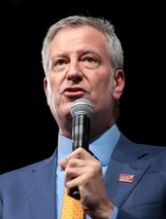
Mayor Bill de Blasio: Welcome everybody. Thank you for being here. I am joined by Deputy Mayor Raul Perea-Henze, Deputy Mayor for Health and Human Services; our Health Commissioner Dr. Oxiris Barbot, who you’ll hear from in a moment; our Emergency Management Commissioner, Deanne Criswell; our Commissioner for Community Affairs, Marco Carrion; our Commissioner for Immigrant Affairs, Bitta Mostofi. Thank you. Want to say at the outset, people all over New York City are depending on all of you and, the fact is, that’s not anything new and I think everyone in this room knows that, that the work you do is for so many New Yorkers, many cases their first source of information, in many cases the source of information they trust the most, a place they turn to make sure they really know what’s going on from people that they have faith in. And I want to thank you for what you do every day, but I also want to thank you for the work you’ve all been doing in the last few weeks. This is a complex situation dealing with a disease that’s literally brand new to the world, just months old. A lot we’re still trying to learn. Everyone’s trying to learn about, you know, getting information out in this atmosphere is particularly important. And so thank you for all the work you’ve done to inform your communities. I think it’s making a very big difference. So we’ve gathered together in different times when we’ve been challenged, when we’ve been at crisis. This one really is different. Thank you. Also want to thank you, I want to acknowledge and thank Dr. Mitchell Allen, the Chief Medical Officer for our Health and Hospitals system. Thank you for joining us. We have been up against many, many challenges as New Yorkers, but a still little understood disease facing the entire globe, challenging the entire globe, an ever shifting environment. This creates dynamics we really haven’t faced before or certainly not in recent memory. And the fact that new information comes in literally by the hour and is effecting our approach and strategies adds to these dynamics. So, I just want everyone to understand that at the outset. The scientific community is trying to understand this disease and there’s new information coming up every day, including from our own health workers here in New York City. All levels of government are trying to come up with the right strategic decisions, but based on information that changes frequently. I do want to emphasize, I think the situation in the United States, America is by definition different than say Italy. And I think Italy is different than say South Korea. I think South Korea is different than say China, et cetera, et cetera. I think each nation is facing some particular dynamics and circumstances and although it’s valuable to look at what we learned from other countries, it is not the whole story, the comparisons aren’t inherently imperfect. I do feel as New Yorkers, we even when dealing with a crisis, we are blessed to have some very, very key and distinct factors in our favor. And we have unquestionably the best healthcare system anywhere in the United States of America and that’s both our private voluntary hospitals and nonprofit organizations, and clearly our Health and Hospitals corporation or public hospitals and clinics, we have just a lot more and a lot better healthcare available and a history of making healthcare available to people in a very universal fashion. And even more recently by guaranteeing health care for all New Yorkers, telling people health care will be available to them without any regard – bless you. You sneeze properly, you get up, you get a point. Little bit more to the elbow, but you were close there. The fact that we’re not asking documentation status, I want to really emphasize that, anyone who comes for healthcare will not ask documentation status – we want everyone to get the help they need. We’re not in our public healthcare system stymied by someone’s ability to pay or not. We’re going to give them care. People have insurance, we’ll draw on that. If they can get insurance and they don’t have it already, we’ll get them on insurance. But we’re not ever going to withhold health care from anyone who can’t afford to pay for it. We’re trying to demystify the process and get people help, as simply as calling 3-1-1or going online and finding out where they need to go. And again, always knowing that they can turn to our health and hospitals corporation. So we do have that great advantage. A lot of health care, law quality, Harris County, very accessible healthcare and equal opportunity healthcare. We also have the advantage of New Yorkers. New Yorkers are, I think it’s fair to say the most resilient people, certainly in America, maybe in the world. And the – I’m very, very impressed by how New Yorkers are handling this crisis, by how much they’re listening for the guidance and acting on it, helping each other. We need that. I said the other day, and I’ll emphasize this is not just a crisis that the government takes care of for you and we’ll call you when it’s over. That’s not how this works. Everyone has to be a part of solving this. So those good common sense personal hygiene adjustments as we just saw make a difference. I’m watching out for those who are most vulnerable, the folks over 50 with those major preexisting conditions, you know, making sure that we’re following the guidance every day for folks who need to be quarantined, honoring the quarantine. These are all really, really important things that really will affect the trajectory. And so far I think New Yorkers are really listening and really following through. So there’s a lot of reasons to feel that there’s a much stronger hand to play here than has been seen elsewhere. I also would say watching particularly the example of Italy, and so many of you come from different communities in the city, so you appreciate where your ancestors come from. Well, my ancestors are from Italy and Italy had a crisis almost before they knew it was, you know, upon them. I mean, the speed with which that happened in such an unexpected manner, such a fast trajectory, very different than what we’ve experienced so far. Now we knock on wood and every day it has to be analyzed and assessed. But Dr. Barbot and I, and Dr. Perea-Henze and I, we got together on January 24th and had a press conference at OEM telling New Yorkers that this disease would eventually reach New York City. Not a matter of if, but when, and outlining on January 24th all the precautions and preparations that were in place, didn’t have our first case Doctor, I think until, we said March 1st? So we had, you know, five weeks of preparation before even getting a single case as opposed to when I say this with great sorrow for Italy, you know, almost no preparation before they suddenly had a full blown crisis. We have to look at those differences and understand them. That does not mean we’re out of the woods by any stretch. We have a long tough battle ahead. Dr. Barbot said, and I’ve commended her for it, her assessment as a professional is that this will be until September, could be less, could be more, but I want to just let that hang in the air for a moment. Six months. We could be at trying to get this under control and starting to resume some kind of normalcy. So when you put that into perspective of the amount of time we had to prepare, what we have to throw at this challenge against how long we will be working to resolve it. Again, I think we have strengths here that a lot of other places don’t have. Just a couple of other points. The fear out there, everyone knows it’s real. The anxiety, the confusion. Dr. Barbot rightly has talked about, you know, not only the physical health dynamics, the mental health dynamics and reminder to everyone, there’s a lot of very worried people, anyone can call 24 hours a day, 8-8-8-NYCWELL, and talk to a trained counselor. The anxiety is natural. It’s normal. It’s not like you on your TV and you get all the answers, right? It’s normal – people would be worried even that it could get all the answers because it’s a serious disease, but it’s even worse when you can’t get all the answers because no one has all the answers. So there’s a lot of fear. The best way to fight fear is with information is with a good guidance by all of us showing that we believe in each other and that we can get through this. That’s what we’re trying to do every day and always tell people what we know and what we don’t know, and the fact that sometimes what we know will change. The guidance could very well change. The decisions could change with new information. I will say very quickly, I’m sure it’ll come up in discussion, I have been reticent for sure and I’m in constant contact with my colleagues, reticent to take the kinds of actions that might cause a huge number of unintended consequences and other negative dynamics. Easy example, closing schools, and I appreciate the state and the partnership. We’ve had to determine the right way to address a situation in a school, not with a sledgehammer, if you will, but with a scalpel, not with a full closure of vast numbers of schools for long periods of time, but with a very pinpoint approach to addressing the specific school, the specific needs and then getting that school up and running. Why? Because families depend on those schools for a safe place for those kids. Many families have no alternative. They have no alternative in some cases as a place to get their children quality food and nutrition. By the way, families want to make sure their kids get educated. We all care about health and safety first, but the notion of losing months and months of our children’s education should be very troubling to all of us. So we’re trying to strike a balance. We can talk about this and many other veins. We’re trying to strike a balance. Every day will be a new day in terms of assessing the information we have. So again, it goes back to giving people good information. We depend on you. Reassuring where we can reassure, being honest about what we do and don’t know. Giving people guidance about how they can comport themselves and what the best things to do are. Another very important message. We will not tolerate any discrimination. We will not tolerate any hate crimes. Right now we’ve seen particularly troubling instances of discrimination directed at Asian communities, particularly in Chinese community. This is unacceptable. We’ve talked openly and honestly about the fact that too many hate crimes go unreported. I am beseeching you all to tell the members of your communities that they are the victim of a hate crime, it must be reported to the NYPD so we can act on it, so we can find the perpetrators, so there will be consequences, so we can stop someone from doing it to another person. Any act of discrimination could very well be something that constitutes a breaking of the law of the city, which we have a very strong human rights law. So people are discriminated against in employment, in terms of their day to day lives, shopping, housing, anything, we want to know about it, we want to stop it. There’s no discrimination. There are no hate crimes that are acceptable, but we have to tell people how crucial it is to report them. Anybody who wants to report such a crime or act to discrimination can call 3-1-1. And obviously that is available in many languages. So, it’s up to all of us to contribute to ending this crisis. Every New Yorker can help. And the information you spread really can empower people to do that. We want to get a lot of information out. This is a – guidance and safety tips, frequently asked questions. This is available now in 15 languages and by Friday it will be 23 languages, so this is all this, these two pages, very, very important basic information we want to get out there. Please get this around to all your communities. It will also be available at nyc.gov/coronavirus. This is a flyer – Stop the Spread – very informative, basic flyer. A lot of great information here. This is available in seven languages and by Friday will be 23 languages. This happens to be an example of the Chinese, we’ll get this around to everyone obviously, but you know here on one clear page is a lot of the most important things for people to know and including one of my personal favorites. If you’re sick, don’t go to work. If you’re sick, don’t send your – if your kid’s sick, don’t send your kid to school. Let’s really do the basics here. That alone could have a huge positive consequence in terms of ending this crisis. That will be an advertising campaign, multimillion dollar public advertising campaign with the Stop the Spread message. Subway ads are already up in English, Spanish and Chinese. There’ll be TV ads in English, Spanish, Cantonese and Mandarin. Those will start Friday. There’ll be TV next week, TV ads in starting next week, Korean, Russian, Hindi, Punjabi, Vietnamese and Japanese. And as I turned to Dr. Barbot simply to say obviously we’re holding a press conference, we expect questions, but I also welcome information, insights about what you see in your communities, concerns that are being raised. So not just traditional questions where we’re giving you an answer as a government, but we welcome your feedback. We welcome your observations as well. With that, Dr. Barbot – Commissioner Oxiris Barbot, Department of Health and Mental Hygiene: Thank you, Mr. Mayor. So I want to start off where the Mayor also began to remind New Yorkers that we have an incredible resource here in the city, NYCWell, and I want to just remind folks of the phone number 8-8-8-NYCWELL. The reason why that’s so important is because we recognize that when people hear new information that may sound scary and they’re hearing every day of increasing numbers of individuals affected around the world, increasing number of individuals who are dying because of this illness, it may cause anxiety, depression of a variety of reactions and indeed, you know, they may be having family members that are affected in these countries. And so we want them to know that NYCWell is a resource that is available 24/7, any language, you can text as well. And so I’ve also been saying that anxiety and fear about this illness is not an excuse to spread hate and the best way that New Yorkers can contribute to having a more healthy city is by ensuring that they have all of the correct information. And so we encourage New Yorkers to take advantage of the resources that we have. I want to just review and summarize what we are learning every day about this virus. When this first began, we were very clear that in what it means to be a novel virus is means that it’s never existed before. No one in the world has ever been exposed to this. And so there are a lot of people who are not immune. And when we have that kind of a situation, it’s natural that every day we will be learning new things. Initially we thought that this virus was transmitted by prolonged household contact, meaning that people who can track did the illness tended to be members of families or people who live together. And then as we learned more specifically here in the cluster that we have been investigating in Westchester, we are learning more every day. So now we know that it’s not just household contacts, it’s also people who have spent a significant amount of time together, which can range from having close conversation over a meal or in other situations that might make it easy to transmit the virus. And we may continue to learn more about how this virus behaves, but the important thing is that there are some very basic things that as the city’s doctor, I want New Yorkers to always do and those are to wash your hands frequently, best to do it with soap and water, but if you’re not close to a water source, to use alcohol based sanitizer. The other thing is that if you cough or sneeze, to do it into your sleeve, not into your hand, and most importantly, if you’re sick, don’t go to work, don’t send your child to school. What we are learning about this illness is that while people may present with symptoms of fever and cough, fever and shortness of breath, it’s not like the flu. Sometimes you know when we get the flu, you’re fine one day and the next day you feel like you got hit by a truck. What we’re learning about this is that people generally present with mild symptoms, some cough, a little bit of fever, and they still go to work. We don’t want them to do that anymore because while you are symptomatic, you can transmit the virus. We want people to stay home, stay home 48 hours. And if you’re not feeling better, typically what we’re seeing is people start developing shortness of breath. We want people to reach out to their doctors and let them know what the symptoms are. And then their doctor will make the clinical decision about whether they get the more common tests we’ve been talking about BioFire, that’s positive, then they will give you the appropriate treatment, where if that’s negative, then they will do the COVID-19 test. So that’s the very sort of simple overview of what we’ve learned, what we recommending to New Yorkers. The other thing I want to say is that when you are sick, we are asking businesses to help support workers stay at home so that if businesses can implement working from home, ensuring that staff have an opportunity to do what they need to do, we want to encourage that. But again, we don’t want folks to be going into work when they are sick. Additionally, I want to say that – I want to echo a very important point that the Mayor made, which is we are committed as a City to ensuring that individuals who need access to care have access to care. And that’s why it’s so important that we have NYC Care so that it’s a guarantee for New Yorkers who may be feeling not only these symptoms but have any other medical needs and have access to care. And I want to remind the New Yorkers that we don’t ask folks about their immigration status. We, if people are uninsured, we work with them to get them insured and that shouldn’t be a reason not to access care. The last thing I will say is that over the – I was going to say over the last few months, because it feels like it’s been that long. But since the beginning of this outbreak, we have been reaching out to a number of different communities to ensure that not only are we putting things out on our website, not only are we doing these press conferences, but we are making ourselves available for meetings and communities to answer questions that individuals may have. And so we were, we are going to continue that. And as the mayor said, and as I have said before, we’re in this for the long haul and we need all New Yorkers to do their part in slowing the spread of COVID-19. Mayor: Thank you very much. Commissioner.Mayor: Two other quick points before we open it up. One, I want to make sure I’m giving you the up to the minute information about the number of confirmed cases in New York City. This morning that was 46, now is an update to 53, so that’s again, starting on March 1st until now, 53 confirmed cases. Also an hour or so ago I spoke to the chair of the St. Patrick’s Parade Committee, Sean Lane. He and his colleagues are talking through the situation with the St. Patrick’s Parade. We’re also in close consultation with the State and the Governor’s Office on this. First, I want to understand the intentions of the parade organizers. I know they are trying to very quickly decide if they think there is a context for them to continue or not. We’re waiting to hear that back. But certainly the City and State are looking at the situation as well and I think we will have resolution on all of this today or tomorrow, either way, but trying to always do these decisions in consultation as much as possible with the organizations involved. Okay. With that. Want to take questions? We’ll start on this side. Go ahead. Question: New York 1 is reporting that this St. Patrick’s parade has been called off – Mayor: We are waiting for confirmation. We heard that too. But again, from the information I had in the last conversation that was not confirmed. So I want t – Question: So what was the discussion that you’ve had with the parade – Mayor: I don’t want to get into details of a private discussion simply to say the, I think it was a very thoughtful conversation where clearly the folks who run the parade are very, very concerned for everyone’s health and wellbeing. They obviously also have a tremendously beloved annual event that’s been going on for hundreds of years literally and want to be very careful and smart about it. So we’re all in consultation. If they have made that final decision as confirmed, well that will end the discussion. If there’s more to be done, again between us and them and the State, I believe that all be resolved today or tomorrow. Question: Did you and Commissioner Barbot personally tell the Parade organizers that you wanted this – Mayor: I’m not going to go into a private conversation. We’re weighing all the factors with them. Question: Did you speak Commissioner Barbot – Mayor: Again, that’s all there is to say to it. Go ahead. Question: You spoke about those who are uninsured, but there are people in the City and can’t afford to stay at home. Mayor: Yes. Question: Because they are undocumented and they need the work. So what is this city planning on doing for those people? Mayor: Well, I want to make sure I’m understanding your question. Right now, again, our goal is to be smart about the public health needs of this city, but also keep the city running as best possible. Keep people employed. We obviously care deeply about people’s livelihoods. I’m very worried about, you know, there’s literally millions of New Yorkers who if they lost, you know, even a week of pay would be in real tough shape. So we’re trying to balance all those factors. But let me understand your specific question? Question: Okay. That was the question because you spoke earlier about people feeling sick and having to stay home – Mayor: Yes. Question: But with some people, they cannot work remotely because of the type of job that they have. So that means that if they stay home because they [inaudible] Mayor: Right. Question: They might end up losing – Mayor: Let’s talk about that. It’s a great question. So this is going to be a combination of Dr. Barbot talking about how long it normally takes to understand if someone is sick with coronavirus or not, but also paid sick days. So obviously for all New Yorkers with a very few exceptions, for the vast majority of New Yorkers, paid sick days means if your own company does not have a paid sick days policy or your union has not guaranteed you a paid sick day policy, we ensure that many other New Yorkers have such a policy. That’s five days each year. That’s really important here because that connects to how long it takes to figure out what’s going on with someone. There’s also real discussion going on at the State and federal level where we would need the help about, you know, trying to extend paid sick days, unemployment insurance, obviously want to see all of that done. But let’s start right here at home. Doctor, help us understand what it normally takes to determine from symptoms, what’s going on.Commissioner Barbot: Certainly. So the average time that it takes for someone who has been exposed to COVID-19 to develop symptoms is anywhere around five to six days. It can be as short as two days. And so in that time, most people develop, as I mentioned before, fever and cough, or fever and shortness of breath. And so what we are advising New Yorkers to do is to stay home for the first 48 hours and if they’re not getting better, to then reach out to their doctors. What we’re also asking doctors to do is to implement things that such as telemedicine, so that instead of someone having to go into the office, they can be assessed either over the phone or through things like FaceTime or other video conferencing. The point being that a patient be assessed to determine whether or not their symptoms are getting better or whether they’re getting worse enough so that they need to be seen in a health care facility. Mayor: Anyone [inaudible] this row? Yep. Question: Brooklyn Hospital Center. Are there any updates on those two cases, [inaudible] – Mayor: In general now I’ll start and if anyone has something specific to add, they will. So we said a couple of days ago that just the volume of cases is such that we’re not going to be doing individual updates as we were able to do before with a much smaller volume. There will be some exceptions, obviously in particularly notable cases, for example, with public employees will be one of the areas where we’ll try and get you more. But generally we’re not going to be able to answer specific questions on specific cases. Go ahead. Question: What is the testing situation? We’re still hearing that people can’t, there’s not enough tests – Mayor: I’ll start and my colleagues will jump in. That’s just not accurate. What I think we have here is there, there are people understandably just want the test, right? They don’t even have symptoms, they want the test or they have very initial symptoms they want the test to. I don’t blame anyone who feels that in this atmosphere, being bombarded by alarming stories. But the first thing and really want people to report this is okay, you feel symptoms, first, you know, don’t go to work, don’t send your kid to school, etcetera. If, and doctor, you’ll – both doctors, you’ll correct if you don’t like anything. You know, if your symptoms start to fade over a day or two, that’s one thing. If your symptoms manifest and continue or get worse, that’s another thing. Anything that seems like it’s sustained, we want someone to get to medical care and get tested for the more traditional – I’m using my own term – more traditional diseases. Before we ever heard of coronavirus, there were lots of other diseases that would cause those kinds of symptoms. And there is a test called BioFire, which is very typically given by physicians that rules in or rules out. Is it 29? I keep losing this please. Commissioner Barbot: 26. Mayor: 26. I’m sorry – I said 29 – 26 common if you will diseases. If you have one of those diseases, you have one of those diseases. If you don’t have one of those diseases and you have sustained symptoms consistent with coronavirus, then we want you tested for coronavirus. If you just came back from one of the countries and have symptoms, then one of the countries that were, you know, obviously a deeply affected and have symptoms, right? We want to get you tested. If you have a direct nexus to an existing coronavirus case and have symptoms, we want to get your test tested. But you know, if any one of us just woke up in the morning and said, jeez this seems really controversial, I’d like to get tested. That’s not what we’re going to accommodate right now. It’s not for lack of testing capacity. It is I think intelligent prioritization. Anyone want to add? Deputy Mayor Raul Perea-Henze, Health and Human Services: Yes. Let me see if it’s on. Mayor: I will also say just one thing that the doctors have a rule with me. If I say anything that’s a little off, they will jump in and correct. Deputy Mayor Perea-Henze: We certainly know that. Mayor: You’re not shy. Deputy Mayor Perea-Henze: So let’s talk about the capacity. Right now the Public Health Lab here in New York City, which is one of the premier labs in the country can do up to 60 to 80 tests a day. You may all be aware of all the issues that we had where the CDC and the FDA and the federal government being slow and then sending us, you know, chemicals for the test that didn’t work. The Mayor really was constantly asking and relieved – demanding that the federal government allowed us to do our testing here locally. Now we have that testing. As of today, two commercial labs, our online Quest and LabCorp, and also H + H that works with Northwell, and many other hospital labs are going to be online. I was on a call with the Governor’s staff earlier today in which he announced that 28 more labs statewide would be now approved to do more testing. We literally went, one by one, you know, and some can do 150, 200 like Columbia, Cornell Montefiore, Mount Sinai, and the expectation is that by the end of the week collectively we will all have around 5,000 – the capacity to do 5,000 tests a week. The public health lab here has two kits from the CDC. Each one of those kits can do a thousand tests each and they already put in for another order. As the commercial labs continued to expand their capacity, obviously that’s where most of the testing will be done, not so much of the Public Health Lab. That was our first line of defense. And so hopefully in the coming days we will have the ability to test all of the categories that the Mayor just outlined very explicitly. Mayor: Okay. Go on back. Yes. Question: Today the CDC stopped [inaudible] Oversight Committee that they are trying to do with second type of test called surveillance testing in which you go out into the community itself and do proactive testing, and that’s six communities around the United States so far are participating in that. Is New York City going to be participating in that? Deputy Mayor Perea-Henze: We just – go ahead. Go ahead. Commissioner Barbot: So we are part of that six cities that were participating in surveillance and we’ve talked about earlier that our early detection system, and that’s been one of the ways in which we have identified new cases. Question: How does that work? Commissioner Barbot: So we work with hospitals around the city and samples that have been previously collected. We then test for COVID-19. Question: Have you found anything through the surveillance testing? Commissioner Barbot: We have found positive COVID-19. I mean the reality is we’ve talked about the fact that there is a community transmission, widespread community transmission, and what that means is that currently where we are in the outbreak, a New Yorker is probably as likely, if not more likely to contract COVID-19 from someone who has not traveled than someone who has traveled. Mayor: Okay. Excuse me. That’s enough. I got to get to other people. Question: Yeah. My name is Javier Castano from Queens Latino and this morning, I was distributing my paper and many people ask me this question is why [inaudible] universities or the school or the all chat classes that take place in a place in a room like this with 50 people. So what is developing? Mayor: So first of all, each institution is making its own decision right now. And what I was seeing is a mix. Columbia University decided the other day to go to online classes because that’s something they can do easily, but they were keeping dorms open and other activities open. So it’s going to be, you know, each one will make its own decision while we’re working with them to try and figure out, you know, what are the smart standards going forward? And it’s obviously about what – again, this is, this is where people have to play a role if we’re going to get through this. Its people being smart about if you yourself are sick, don’t go to a gathering. Being very mindful of the folks who are older and have those preexisting conditions. But also trying to strike a balance because there is a profound danger if you just start shutting down everything, you’re going to lose a lot of other things that we depend on in the dynamics of that, like people’s livelihoods. And when people don’t have a livelihood, there’s a lot of consequences to that too. So we’re trying to strike a balance all the time. It’s very clear from what we know that this is a disease that transmits in a particular way, not in every way. And I think if you look at some of the reporting out there, you would think, you know, you just have to look at someone with coronavirus and you’ll get it or, you know, walk into a room someone was in a day before. So no it’s very direct contact and then fluid transmission, we don’t know everything. And you know, the doctor could tell me tomorrow that there’s new research that tells us something new. But after all of us talking about it for six weeks straight, we really do believe this is, you know, very direct contact, fluid transmission is what is the essence of this. So we want decisions made carefully and when we get to a point of needing to give some very specific guidance beyond what we’ve given now we will, if we get to the point of needing to instill – or utilize very specific tangible emergency measures, we would do that. But right now it’s day by day, case by case. Question: Mr. Mayor – Mayor: Only people have not gone please. I’m sorry. We’re going to – we got lots of hands so that’s all we’re going to do today is one round per person. Go ahead – Deputy Mayor Perea-Henze: Let me add something that I think all of you should, as the Mayor said, could help us with. Remind people that 80 to 90 percent of all of us could be touched and we are going to be okay. We may have mild symptoms, as the Mayor keeps saying, also remind everyone that we need to protect those most at risk and those are our seniors and people who have this preexisting conditions. Only one percent of the population that has been affected worldwide right now is in serious conditions. The average age, you know, in some – in China and some of the places is 81-years-old. We don’t have that many cases, but please remind people that it’s okay to try to live a normal life as much as possible with the precautions that we continue to address. Mayor: Okay, this side. People have not gone go. Question: Yes. I, I just wanted to ask about how long the virus lasts on surface as you understand it? Mayor: Go ahead. Commissioner Barbot: So there’s a range. Laboratory studies have shown that the virus can survive for hours. Real world scenarios indicate that the virus may live anywhere from like two to five minutes. I think the real question should be how can New Yorkers best protect themselves? And that’s, you know, the answer is going back to the basics of hand-washing and covering your mouth and your nose when you cough or you sneeze. I think having the additional information of the importance of just basic cleaning is also important. Part of what we haven’t talked enough about is the behavioral changes that we as a society need to go through and to remind ourselves that every time we’re are wiping a surface, every time we are washing our hands that it’s not just about doing it for ourselves, but it’s for doing it for our neighbors as well. Question: Okay, and just to follow up on that though, because there was a study and it was published today according to the this news report today, that found that the viable virus could be detected up to three hours later in the air and up to two to three days on plastic and stainless steel. And I’m just wondering like if the City has been able to evaluate that study and draw that into what you all are recommending people because this study is saying it could be up to two to three days on plastic and stainless steel. Commissioner Barbot: So on a daily basis, we’re looking at all studies that are coming out. You know, scientists across the world, they’re studying all aspects of this. I think the important thing here to note is the difference between surviving in a laboratory setting and being able to actually transmit the virus in a way that it causes illness. And so I don’t want New Yorkers to come away thinking that in any way, shape or form they have to worry more about one particular surface or another. The important thing is to focus on the fact that hand-washing, covering your mouth and your nose when you cough, is an appropriate way, not only in the beginning, but it will be an appropriate way in the middle, and it was always be an appropriate way to protect yourself and your family towards the end of the outbreak. Mayor: Okay, we’re going to finish this side, one per – one round each, go. Question: Okay. So a number of a dim sum parlors in Sunset Park, the Eater reported that, is there anything that the city can do to help those business and employees when they are close? Mayor: Yeah, I mean the, the things we’ve put out there already that for businesses under a hundred employees we can do no interest loans of up to 75,000 for businesses have fewer than five employees. We can do direct grants up to 40 percent of their – I think its operating expenses is the basis I need to check that – but substantial direct grant. That’s one thing we’re looking for. Any other relief we can find. Look, we’re also telling people to not avoid restaurants, not avoid you know, the normal things they would do. This does not transmit through food or drink. Again, I constantly am peppering the doctors with questions, common sense questions that they are adamant. All of our healthcare experts are adamant. You don’t get this disease by eating food in a restaurant or you know, eating takeout or drinking something. It is neutralized in your digestive system. You get it through cough, sneeze, or spit and you know, through people talking in spit coming out inadvertently for example. And it has to go directly into your mouth, nose, or eyes. So people should go out and continue to live life, should go out to restaurants, and obviously we don’t want any discrimination. That’s unacceptable. But for businesses that are hurting, we’ll try and give them support. We’re hoping that we’ll see other federal support as well. And I’d hope they can hang on, because you know, this is, this is somet . Press Release.


- New York Attorney General James Releases Statement on Live Nation Trial
- নিউইয়র্কে গোল্ডেন এইজ হোম কেয়ারের ইফতার মাহফিল
- নিউইয়র্ক বাংলাদেশি আমেরিকান লায়ন্স ক্লাবের ইফতার ও দোয়া মাহফিল অনুষ্ঠিত
- নিউইয়র্কসহ যুক্তরাষ্ট্রের উত্তর-পূর্বাঞ্চলে ৭ মার্চ ঘড়ির কাঁটা এক ঘন্টা এগিয়ে যাবে
- নিউইয়র্কে জ্যামাইকা বাংলাদেশ ফ্রেন্ডস সোসাইটির বার্ষিক ইফতার ও দোয়া মাহফিল
- Radwan Chowdhury Announces Candidacy for Montgomery County Council At-Large, Launches “Five-Pillar Blueprint” for Accountable Governance.
- New York Attorney General James Reminds New Yorkers of SNAP Work Requirements
- নিউইয়র্কে ডিজিটাল ওয়ান ট্র্যাভেলস এবং বাংলা ট্র্যাভেলস এর ইফতার মাহফিল