Update on New York City’s Coronavirus Response: MAYOR DE BLASIO HOLDS MEDIA AVAILABILITY ON COVID-19
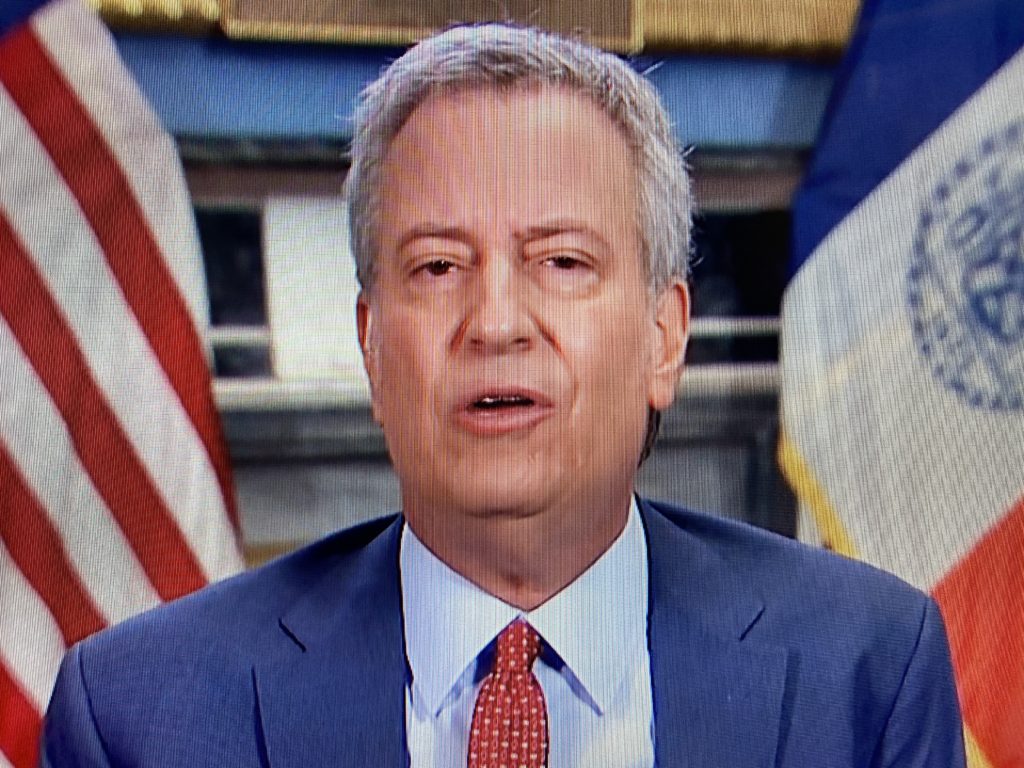
Mayor Bill de Blasio: Well, everyone, very important updates to go over today. And also, as we talk about challenges, we also want to talk about always all the support. We’re getting, all the people who are coming forward, not just from all over around New York City, but from all over the nation to help our city in our time of need. We’re dealing with a big challenge together, but we are certainly not alone. And there are so many amazing stories. People who want to help and are helping and giving their all for New York City right now. And in a few minutes, I’m going to talk about an old friend who has returned – and we are so happy he’s back – coming to our aid at the moment we need it. But first, let me talk to you about a conversation I had earlier today with the administrator for FEMA, Peter Gaynor. This is the man who the president has tasked with leading the effort nationally to ensure that the efforts to stop coronavirus are fully resourced in New York and around the country. So, he’s really leading this extraordinary mobilization all over our nation. And Administrator Gainer was very, very focused, very concerned, concerned about needs in New York City. Very aware of the details of what we’re facing. We had a long and detailed conversation. We went item by item related to everything we need here. Timelines, specifics about how to get the job done, and also about how important it is to protect New Yorkers in this moment. To stay ahead of this. To recognize the challenges in the next few weeks, and get the personnel, and the equipment, and the supplies in place in time. I think everyone knows, I’ve talked about this Sunday, April 5th as a crucial, crucial day, and I’ve done that for a reason. I want everyone to understand it. It’s not to be alarmist, it’s to focus the energies of our national government, to focus the attention of everyone who can help us, to help them understand how important it is to maximize support for New York City by this Sunday. And then in the days immediately following as we prepare for a real upsurge. But I’m happy to say that Administrator Gainer, I could not be more pleased with the conversation. The focus he showed on each and every item, and the ability we had to determine together how we would proceed to the maximum. I express my thanks to him on behalf of all 8.6 million New Yorkers for everything FEMA has done already. And we are so especially appreciative for the amazing support we’ve gotten with the ambulances that have arrived, the EMT’s, and paramedics to help us address the challenges we’re having. And I think a lot more help is on the way. So, it was a very encouraging conversation. Now, I’m going to talk about our immediate needs, and I’m going to give you some real detail about what we need in the coming days. And then of course, I’m going to be talking about the important work that Jimmy O’Neill is going to be doing starting immediately. But let me say, as I go into the specific numbers, and you’ll hear, I should say also after my report, you’ll hear from Dr. Katz. And he’s going to go over some very specific updates related to Health and Hospitals, and then how we’re going to be building out our hospital capacity in general, and then you’ll hear from Jimmy O’Neill after that. But I want to emphasize how much effort has already been expended. It’s unbelievable. If you look at what’s happened over the last weeks, how many people have gathered together to provide support already. And again, the toughest weeks are ahead. But I want to tell you upfront, hundreds and hundreds of people who have worked to ensure the supplies we need have kept coming in. And I’ll talk about them more as I talk about Jimmy’s new role. But there are so many people at the Emergency Management Command Center in Brooklyn, folks from City Hall who are there at the command center and working remotely who have played a crucial role. Folks who work at Department of Health and Health + Hospitals in their warehouse, in their supply operations – so many people every single day are participating in getting the supplies where they are needed. We talked about huge, huge distribution that happened yesterday. This is going to be an ongoing effort and it’s going to be like nothing we’ve ever seen in the history of the city, and a lot of people are making it happen. I want to thank all of them, and all New Yorkers should have them in their hearts, because this group, they are unsung heroes, but they’re doing amazing work to protect all of us. Now, I want to talk about, since I’ve put Sunday, April 5th, as that kind of demarcation line, that D-Day, by which we have to get ready this coming Sunday. Let me tell you where there is good news and we said this Sunday to prepare for the entire week of April 6th ahead. There are two types of supplies that we’re now confident we will have a sufficient amount of for the week of April 6th for all hospitals in New York City, for all first responders. I want that standard to be really clear. We are all working together. Federal government, State government, City government, nonprofit organizations, charities, everyone’s working together. When we think about our hospitals, we are thinking about all hospitals together. Public, voluntary, independent, we’re thinking all of them. Everyone is wearing the same uniform. We’re also thinking about our first responders who obviously need to get the protective gear, the PPE’s when they need them. We have to make sure that supply is strong. So, we are confident based on all our projections that for next week we will have sufficient eye protection. That means the face shields, and the goggles, and sufficient surgical gloves for all those needs, for everyone who is doing this crucial work. For all our heroes who are out there protecting us. For all those healthcare workers who are at the front line. We will have enough of those two categories. We need major resupply in some other categories. Now, I want to emphasize, I say this – we have requests out to the federal government, the state government, to private vendors, to the many, many individuals who are seeking help. So, when I tell you these numbers, it’s against the backdrop of many moving parts already, many actions already, to make sure we will get the help up. My job is to tell you where we stand, and I’ll constantly update you as more supplies come in. So, the need at this moment here on this day thinking ahead to Monday, we still need 3.3 million N95 masks to come in by Sunday to prepare us for the week ahead. We need 2.1 million surgical masks. We need 100,000 isolation gowns. These are big numbers, for sure, but they are reachable numbers, but we have to make sure it happens in time. Now, those are all very, very important. But the area that I focus on all the time is ventilators. When it comes to equipment and supplies, the number one concern I have is ventilators because they keep people alive and they give our healthcare professionals an opportunity to save lives. We have continued to get a very substantial supply of ventilators, but we still need 400 more to be in place by Sunday to prepare us for the week ahead. So, we have many, many requests out, many efforts that are underway to get those 400 in place in time. That’s to be ready for Monday. In the course of next week, and again, we have requests out to the federal government, state government, many sources. In the course of next week, we will need a minimum of 2,500 to 3,000 more ventilators. Now, extraordinary efforts are underway to tap into the supply all over the country and to work to see what we can produce here in this city. But that is the number we’re working with at this moment for next week. There’s also an ongoing effort to get personnel. This is a growing concern as we go forward, but again, one where we see a tremendous response. So many New Yorkers have volunteered folks with medical training of all kinds. More and more volunteering to come forward and their being act on right away [inaudible]. We’ll talk about the many people who have been found. Medical professionals been put under contract, who are joining us rapidly. And the requests that I’ve made to the White House and the Pentagon for over a thousand military medical personnel. I reemphasize that request to Administrator Gainer of FEMA earlier today as well. I’ll keep you updated on that. So, many personnel needs but also a lot of personnel coming our way quickly. But we have to always remember to keep building out that ICU capacity. We need to keep using those ventilators we need, we need the personnel that go with it. And we also have to constantly think about giving some relief to the heroic folks at the front line right now in our hospitals. They need to see reinforcements come, they need a chance to get some downtime so they can finally recover from everything they’ve been doing and then they can get back into this battle. So, we will keep an eye constantly on that personnel situation and update you regularly. So, the bottom line, supplies continue to come in at a very rapid rate and they go out right away to hospitals all over the city and to first responders. The speed has become remarkable. The turnaround time very, very quick, to again, all the hundreds of people and especially to that team at Emergency Management, all the folks from Emergency Management, from the agencies, from City Hall, my extraordinary colleagues who came together to create this rapid deployment plan of bringing in supplies and getting them out. I want to give you, again, profound thanks for what you’ve achieved, and we’re going to need you even more in the weeks ahead. Now, I decided as we built out this apparatus that we wanted to bring in additional leadership and some of the best leadership anywhere in this country, and we know him well. He led with great distinction our Police Department. I was so proud the day I named him Police Commissioner. He did an outstanding job in those years serving us, leading an organization of over 50,000 extraordinary people and keeping this city safe. I’m going to talk about the role that Jimmy O’Neill will play and it’s going to connect exactly into what I’ve just told you already about everything we’re doing to keep our hospitals strong. But I want to take a moment to express my gratitude because Jimmy’s coming to aid us, because of the willingness of his company VISA and particularly its CEO Al Kelly, who is someone I’ve known for quite a while, who’s someone who really loves New York City and cares about this place. I want to thank Al. I want to thank VISA for freeing up so much of Jimmy’s time so he can do this crucial work, it’s going to be a truly lifesaving. So, a profound thanks to you. Now, that team, as I mentioned, the hundreds and hundreds of people who are moving the shipments constantly, that’s been an area where we’ve seen tremendous strength and consistency. What I want to see now is absolute seamlessness in terms of how supplies, equipment to go into our hospitals immediately get distributed where they’re needed in the hospital to the frontline workers that we constantly are able to say exactly which hospital needs what at any given hour. I’m not talking about weeks, I’m not talking about days, I’m talking about any given hour, knowing exactly what each hospital needs. So, we can make those rapid moves those rapid shipments and ensure that within each hospital that distribution is strong and smart and of course we are being honest. We’ve always been honest, I know Dr. Katz will make this point as well, that as we get into supplies, we have to shepherd them. We have to make sure they’re being used properly, support our health care workers with everything we’ve got, but also be smart about rationing what we have to make it last in this tough situation. I thought about all of those pieces and I thought about the many different kinds of hospitals and I think we’ve got some of the greatest hospitals in the world. Everyone knows that in this City we’ve got our public health system, which has really distinguished itself in this crisis and Dr. Katz’s leadership and his team has been amazing. We’ve got independent hospitals there, they’re smaller community-based hospitals and they play a crucial role in our City. But a lot of them have gone through for years – financial hardships. They often deal with folks with tremendous medical needs, but— on many, many times people that don’t have insurance. So, those independent hospitals are absolutely crucial in our ability to fight this battle, and a lot of them have struggled lately no fault of their own— they’ve always been there for people in greatest need, but they need special help now. So, I’ve asked Jimmy O’Neill to develop a system for ensuring that we’ll have personnel in every hospital where they’re needed. To help make sure that this supply chain is seamless and constant and focused, that the supply usage is just the way it should be and any hospital that needs additional help will be able to get it to them quickly. Jimmy will assemble a team with folks from City Hall and other agencies so we can have that presence in the hospitals and it will allow us to have a much faster and more precise communication and get people what they need when they need it. So, I’m very, very appreciative. You’ll hear from Jimmy in a few minutes. And now, I want to talk to you about looking ahead, this whole month of April. I told you what we’re trying to get done by Sunday, I’ve told you how we see next week. Next week is going to be a very difficult, intense week, and yet the preparations have been very, very strong for next week as well, we’ll keep updating you on that. But here’s the overall situation the alluded to it many a time, but I want to just remind all New Yorkers about this we’re always going to need more of— that supply chain I talked about. We’re going to need the masks and the N95s and the gloves, the gowns, all that, every single week we’re going to need more of that. We’re going to need the ventilators, especially in that number that we’ve said I’ve said from the very beginning, 15,000 for New York City, that number is a very specific number based on the projections we’ve had. That number continues to be the right number, continue, I’ve told the President, United States and everyone else I’ve spoken to in the federal government that is the true number. And the second we don’t need all those ventilators we will happily share them with the rest of the country immediately. When it comes to— hospital beds, again, the goal is to take the 20,000 or so we started with the month of March with a normal compliment of hospital beds in this City that we’re staffed with professionals all over our hospital system. Those 20,000 are increasingly going to become all ICU beds over the month of April. That’s what our hospitals will be for more and more taking on the toughest COVID cases at the front line. We need to build out during the month of April, an amazing number of additional hotel beds 60 excuse me I said hospital beds, I should say, my apology, hospital beds and hotels would be one of the ways that we achieved that. But hospital beds, we need to build out an additional number of 65,000 hospital beds in the City of New York by the end of April. We already have a tremendous start the 20,000 beds, as I say, they were already there. Hospitals are now adding up to 50 percent more capacity just drawing on all the space they have and Dr. Katz talked about this from the beginning of the ability of hospitals to quickly build out more beds, more space, more ICU. That number will add an additional almost 10,000 beds right there, Javits Center we’ve talked about, Dr. Katz will go over this, thousands of beds there, and then all the hotels will bring online increasingly. So, this is going to be an epic process through the month of April to build out that capacity but this goal is within reach. It’s going to take herculean effort, but I’m confident it can be reached. So now, as I turn to Dr. Katz, we’re going to talk about where we are today on our hospital capacity, the building out process, starting with our public hospital system. This is – this growth pattern, this building out I’m talking about is literally going on 24/7 – and a profound thanks to everyone who’s participating in it. So, Dr. Katz is going to give you a sense of where we stand today and how we’re going to be moving forward over the coming weeks. Dr. Mitch Katz. President and CEO Mitchell Katz, Health + Hospitals: Thank you so much, Mr. Mayor. And thank you for supporting the public hospital system. It’s clear in this emergency how lucky we are that New York City kept open its public hospital systems didn’t allow them to close the way it happened in Philadelphia and Washington DC and Milwaukee because in this crisis we so desperately need the public system. We have 324 ICU beds that we run on under normal circumstances and a total of 4,428 beds. And while that, those are very large numbers they pale in comparison, Mr. Mayor to what you showed us we’re actually going to need in this crisis. But we are prepared to meet the crisis in our immediate surge to handle it. Elmhurst Hospital, which is on the forefront of handling COVID patients, it’s in an area of central Queens. Where a large number of districts depend on this hospital because there is no other hospital near it. It has already increased from 29 intensive care beds to 111 intensive care beds and, sir, that’s in the matter of 10 days. I mean, these are changes that you would expect under normal circumstances, would take six months to a year to get the beds in place, to get the staff in place, to get the equipment in place. Every single one of these beds represents a courageous nurse taking care of the patients. Courageous physicians on all of the support intensive care patients need a great deal of support from pharmacy from transport, from radiology. It’s a tremendous effort to take care of each intensive care unit patients and yet Elmhurst has magically gone from 29 to 111 beds. At Lincoln Hospital they’ve grown their ICU from 34 beds to 114 beds with 30 more coming there. And Bellevue Hospital has grown from 66 to 127, with 52 more coming. And this is really just the beginning of what we need in order to handle this emergency. We have in order to deal with the fact that COVID-19 patients have not appeared evenly across our system as the epidemic hits different parts of our City at different moments. Also, we recognize that some areas of our City like Queens have markedly fewer hospitals, so it’s not just Elmhurst Hospital, but Queens, hospital that has also been hit extremely hard by patients and very sick patients. So, in order to be able to do this we have transferred 193 non-ICU patients and 43 ICU patients from the hospitals that have been most effected and moving them to hospitals where we have had greater capacity in the last few weeks. So, we’ve been moving patients to Coney Island Hospital, to Jacoby, to Harlem, to Metropolitan, and the North Central Bronx have all taken patients in order to make sure that we are able to provide care for every patient who needs it. Every hospital and I speak to them every night knows exactly what space they’re next going to open during the night. We’ve seen a large number of patients needing intubation come in in the evening hours so we open the units often in the middle of the night in order to accommodate them. But in every case, we know what those surge wards will be it fits with the very plans that we started working on in January and February when we first saw the data coming from China. We recognize, Mr. Mayor, that while these are huge efforts, they won’t meet the needs as you’ve outlined them to New Yorkers. So, in the short-term we’re going to bring on an additional 762 intensive care beds for a total additional beds of 2,466. And again, while these numbers are astronomical, they don’t add up to the numbers that you showed New Yorkers of what’s going to be needed. We intend to convert all of the hospitals into intensive care units because an intensive care patient relies tremendously on the ability of the laboratory, on the pharmacy, on equipment, radiology – you cannot create an intensive care unit, a bed in a hotel. But what we can do is turn out facilities into large intensive care units and then use the hotels and the other alternative facilities for medicine patients who do need support but don’t need the same level with ICU need. This is going to require a huge influx of equipment and even more importantly of staffing. The issue is not one of spacing and we’ve said this right from the beginning. There are many places in New York City that would be available to create additional space. The challenge is having the staff, having the equipment, and in the case of intensive care units, having all of the other services that would be necessary in order to keep people alive. So, it’s our commitment to you, Mr. Mayor, that we are going to do everything working with you and all of the great people in New York City to achieve this. In order to reach just what we’ve done so far, we’ve added 165 physicians, nurse practitioners, and physician assistants to the system. We deployed a thousand registered nurses; we have another thousand registered nurses coming within two weeks and we’ve added another 350 physicians, nurse practitioners and physician assistants that will be coming in the next week, but this will still, again, not be sufficient. We will need a great deal more staff than this to be able to successfully increase by the number of intensive care beds that New York City’s going to need. We’re doing everything possible to support the incredibly brave nurses and physicians and support staff of every kind, who are working long hours often watching their own coworkers become ill. It creates a tremendous sense of distress to both be working hard and know that coworkers have gotten sick, but people are bravely working on. We want to do everything possible that we can to support them. We’re making sure that there is COVID-19 testing available free for any of our frontline personnel – that’s starting at our occupational health clinics. We’ve received more than $1.6 million in donations to provide comfort items to our frontline staff. They can’t take any breaks to go out to get food. That’s not even in, in our rule book about how you get through these kinds of crises. So, having people give us donations so that we basically can bring in food for all the shifts of workers, people do need to eat and we are very grateful. The rooms in the hotels – many people who are working 12, 16 hours and around many, many patients with COVID do not feel comfortable returning home to their spouses and their children. So, we have provided hotel rooms so that they can go to a place where they feel they can get rest without putting their families at risk and come back the next day. We’re providing taxi rides. You, sir, provided parking vouchers for people so that they can park their cars easily. Our Helping Healers Heal is extending emotional, psychological counseling to healthcare workers in dealing with the stress; having your patients die despite the very best efforts is so distressing. This is a very fierce disease for a very small number of people. We’ve put up the for people who wish to donate to support your healthcare workers at nychhc.networkforgood.com and we so much appreciate the support of all of the first responders: fire, EMS, the police, the people at the Office of Emergency Management who have been getting us supplies and keeping us going. In terms of additional surge Mr. Mayor, would you like to speak about these facilities? Would you like me to speak about them? Mayor: I’ll just say broadly, and Mitch, you can talk about some of the specifics, but broadly, when you look at this list, and remember everyone, this is a series of facilities that just days ago were not outfitted to provide healthcare. So, if you go through the list, which, and, and Mitch will talk about it, but every single one of them is either a place that was doing something totally different or is something brand new in this city. Obviously the most powerful example, the most compelling example, which we all are feeling is the presence of the USNS Comfort. So, Mitch will talk to you about the specifics that we have already moving and then I’m going to talk about how we’re going to turn more and more hotels into hospitals. So, you start, Mitch. President Katz: Sir, I had the pleasure, the pleasure of going to Javits Center and seeing a tremendous number of staff who are willing and able to take care of patients to help us to unload our hospitals so that we can focus on the intensive care unit of intubated patients – located on the West Side of Manhattan. In phase one, a thousand medical surgical beds are currently available with another 1500 medical surgical beds to come in late April. Samaritan’s Purse located in Central Park with additional support for Mount Sinai: 65 beds, 10 intensive care unit, and 55 medical surgical beds that we believe will come up in 24 to 48 hours. We were all so proud to see the Navy bring the Comfort ship located in Western Manhattan with 750 medical and surgical beds and a crew of phenomenal physicians and nurses who are prepared to take care of patients. At one of our own facilities on Roosevelt Island we were able to open up 240 medical surgical beds. We already have more than 25 patients who are being taken care of in that facility and during this week we will fill it up. We have, I know you were yesterday at the National Tennis Center located in Corona, Queens showing New Yorkers that you’ve prepared a facility that can take care of up to 350 medical and surgical beds. At Brooklyn Cruise Terminal in Red Hook we believe it will be possible to create up to 750 medical and surgical beds that will go up in mid-April. And then finally, we know that the hotel industry is capable of providing us with a large number of rooms. We so far have secured 10,000 beds and 20 hotels and we believe that the capacity is there. Again, staffing will be one of the things we will most work with you, Mr. Mayor, to be sure that the people in all of these facilities are fully cared for. Mayor: Thank you very, very much Mitch and get ready, I’m going to come back to you on the, the way people can donate to your frontline healthcare workers so get that website ready again. But, let me first say, so, think about the amazing, amazing, fast, intense, passionate effort that’s being made here to expand our hospital capacity in record time. Nothing like this has ever happened literally in the history of New York City. Let’s go back to that previous slide; I want to work off of that. The, again, think of where we started. We started at the month of March; 20,000 staffed hospital beds in what everyone would say is, you know, we’re the finest hospitals in the United States of America. Take all the hospitals in New York City, take all the professionals, all the amazing talent; you know, this where so many of the doctors of tomorrow train for the whole nation. That was an amazing place to start. No one could have imagined a world in which we’d have to build out so much so quickly but now, when you think about the fact that those hospitals that with their 20,000 beds are basically adding 10,000 more within those hospitals. You look at what Mitch has reviewed on this slide before us, the thousands of beds at Javits, the USNS Comfort, like adding right there in that ship – like adding – another major hospital to New York City. All these different pieces are starting to add up and then we go to the hotels. So, the fact that, right now, the hotels we’ve already identified and contracted with – and I want to thank everyone in the hotel industry by the way – I want to thank the owners of the hotels, the managers of the hotels, the people that work in the hotels, the unions who represent the people in the hotels, everyone has been working shoulder to shoulder to speed this effort because it has to happen in record time. So, right now, we already have accounted for 10,000 additional beds: you take the 20,000 we started with, the 10,000 more we’re adding in the hospitals themselves, look at 10,000 more already from the hotels that will be coming online soon – that’s 40,000. The thousands more you see on this slide in specific locations and we’re going to keep building and building. The key going forward is going to be more hotels and more big spaces. We’ve got obviously in the case of the Javits Center, in the case of the Billy Jean King National Tennis Center, in the case of the Brooklyn Cruise Terminal, these are large spaces where you can do hundreds of beds at a time or in the case of Javits, thousands. We’re going to be looking for more and more spaces like that. I know the State of New York is also doing the same, and we’re all coordinated; we’re dividing labor. They’ve got major spaces that they’ll be working on. The City will be adding our own. We’ve been getting tremendous cooperation from the private sector. Again, I’ll tell you the day we ask someone to help fight the coronavirus and they say, no, but I have not had that day yet. So, in terms of finding the additional beds we need, we believe there is enough major venues – bigger spaces in New York City – that we can retrofit, and we can do that quickly. And we’re working with folks in the construction trades, contractors, folks in real estate; they’re all saying yes, they’re all quickly helping us get this work done. And then those hotels, and I’m very, very sorry for what the hotel industry has been through in this crisis. A lot of people have been put in a tough, tough situation to work in our hotels – they’re obviously struggling, but what it has meant at the same time is a huge number of hotels have become available to the City of New York and literally we can go in and lease an entire hotel building and we can do that dozens and dozens and dozens of times until we get to the point that we have all the beds we need. So that is the game plan. It’s going to be furious and intense, but we’re going to get it done and I’m so grateful to everyone that’s a part of it. As I say a few more words and then we’ll turn to Jimmy, I want to remind people again; if you’re able to help our frontline hospital workers, these heroes have been doing so much and Mitch’s folks in the public hospitals have borne the brunt they’ve done amazing work. Mitch, one more time, what’s the website people can go to if they just want to give those direct donations, the food and the other things that will help your heroic workers get through the day, what’s that website again?TRANSCRIPT



- নিউইয়র্কে গোল্ডেন এইজ হোম কেয়ারের ইফতার মাহফিল
- নিউইয়র্ক বাংলাদেশি আমেরিকান লায়ন্স ক্লাবের ইফতার ও দোয়া মাহফিল অনুষ্ঠিত
- নিউইয়র্কসহ যুক্তরাষ্ট্রের উত্তর-পূর্বাঞ্চলে ৭ মার্চ ঘড়ির কাঁটা এক ঘন্টা এগিয়ে যাবে
- নিউইয়র্কে জ্যামাইকা বাংলাদেশ ফ্রেন্ডস সোসাইটির বার্ষিক ইফতার ও দোয়া মাহফিল
- Radwan Chowdhury Announces Candidacy for Montgomery County Council At-Large, Launches “Five-Pillar Blueprint” for Accountable Governance.
- New York Attorney General James Reminds New Yorkers of SNAP Work Requirements
- নিউইয়র্কে ডিজিটাল ওয়ান ট্র্যাভেলস এবং বাংলা ট্র্যাভেলস এর ইফতার মাহফিল
- রূপসী চাঁদপুর ফাউন্ডেশন নিউইয়র্ক ইনক’র ইফতার ও দোয়া মাহফিল অনুষ্ঠিত